
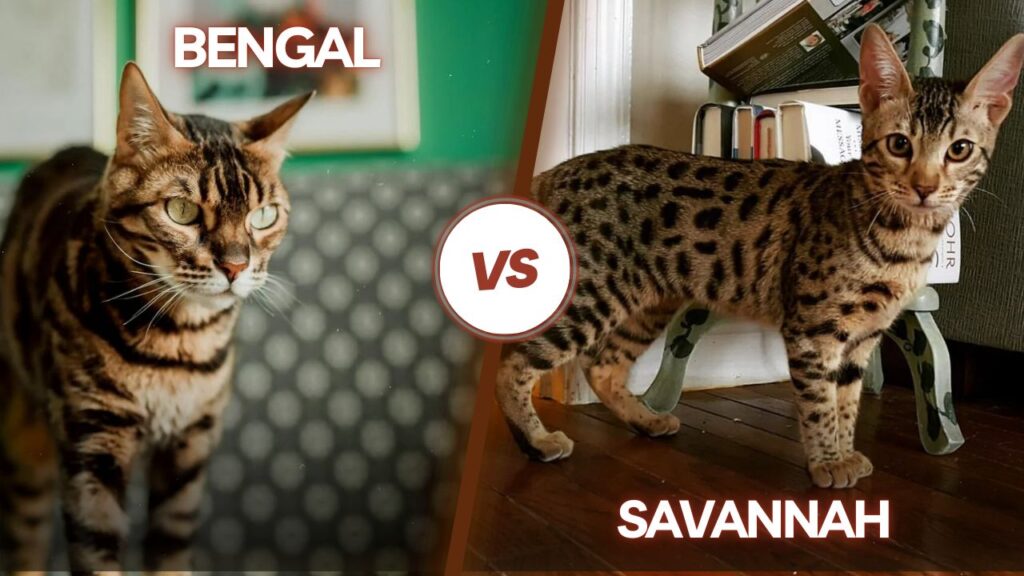
Bengal and Savannah cats stand out as striking, energetic, and charismatic pets. Both breeds have wildcat ancestry, but their personalities and physical traits differ significantly. While Bengals are playful and often vocal, Savannahs are known for their graceful elegance and occasional independence. Understanding these differences can help you decide which breed is the right fit for your home, depending on your family dynamics and lifestyle. Whether you’re attracted to their wild looks or their unique temperaments, both breeds offer companionship, love, and a sense of adventure to any household lucky enough to adopt them.
1. Origins And Ancestry

Bengals and Savannahs both have intriguing wildcat backgrounds but diverge in their origins. Bengals were created by crossing domestic cats with the Asian leopard cat in the 20th century. This breed inherits the beauty and curiosity of its wild ancestors while maintaining domestic sociability. Savannah cats, on the other hand, come from domestic cats bred with African Servals, resulting in a wilder appearance. Unlike Bengals, Savannah cats can show varying degrees of wild traits, depending on their serval lineage. Whether you’re drawn to their looks or behaviors, their distinct lineages create lasting impressions.
2. Appearance

In terms of appearance, Bengals and Savannahs both have a wild flair but in different ways. Bengals are known for their gorgeous rosetted or spotted coats that give them a leopard-like look in shades of golden, brown, or silver. Savannahs, meanwhile, have long legs, sleek bodies, and striking large ears that add to their wild look. Their coat patterns consist of dark spots on a lighter background, resembling a serval’s distinctive markings. While Bengals present a sturdy build and wild elegance, Savannahs stand tall and elegant, with a natural grace that hints at their serval heritage.
3. Personality Traits

The personalities of Bengals and Savannahs, though both lively, offer distinct experiences. Bengals are famously social and love engaging with their humans. They demand attention and enjoy lots of interaction. Savannahs, while affectionate, often have a bit more independence. They enjoy quiet bonding time but are typically not as persistent about attention as Bengals. While Bengals are curious and playful, Savannahs display calm confidence and intelligence in their interactions. It’s easy to see that Bengals thrive on connection, while Savannahs offer a more laid-back approach to family time, making them a bit more suited to low-maintenance homes.
4. Activity Levels

Both Bengal and Savannah cats have high energy levels, though they show it in different ways. Bengals are known for their constant motion, always exploring, climbing, and running throughout the house. They require plenty of stimulation and love to discover new things. Savannahs are equally energetic but take a more cautious approach to their activities, often hunting toys or enjoying walks outdoors. If you’re looking for a cat that’s always on the go and eager to engage in physical play, Bengals might be the more suitable choice. However, both breeds need ample mental and physical activity.
5. Vocalization

When it comes to vocalization, Bengals and Savannahs both make their presence known, but in unique ways. Bengals are known to be very chatty, expressing themselves with a range of sounds like trills, chirps, and meows. They’ll often “speak” to you to get attention or share their thoughts. Savannahs, while still vocal, are much more reserved in comparison. Their calls are often softer, sometimes mimicking the sounds of their serval ancestors. While Bengals will happily chat away, Savannahs provide a quieter, subtler means of communication, which can be appealing to those who prefer a more peaceful household.
6. Compatibility With Families

When considering Bengals and Savannahs in family environments, it’s important to recognize their contrasting personalities. Bengals thrive in lively, busy households where they can interact with people and other pets. Their outgoing nature makes them great companions for families with children or multiple pets. Savannahs, on the other hand, may need more time to adjust to family life, especially if it’s noisy or fast-paced. While they are loving and affectionate, they often require more personal space and time to feel comfortable in hectic settings. Both breeds can adapt well, but their needs differ depending on family dynamics.
7. Water Affinity

Bengal and Savannah’s personalities are influenced by water, but their preferences vary. Bengals love water. They might leap into sinks, baths, or even hop in the shower with their owners to have some fun splashing around. Having fun in the water makes bath time a breeze for pets who love it. Savannahs pay more attention to water usage. They might enjoy swatting at running faucets or playing in shallow areas, but they don’t jump in headfirst like Bengals do. Each breed has its own unique way of enjoying water play.
8. Training Potential

Both Bengals and Savannahs are intelligent cats that can learn quickly, but Savannahs often stand out when it comes to training. With their “dog-like” qualities, Savannahs can be trained to perform a variety of tricks such as fetching or walking on a leash. Bengals are also quick learners, especially when it comes to puzzle games that stimulate their natural curiosity. However, their high energy can make training more challenging if not directed toward playful tasks. While both breeds enjoy mental stimulation, Savannahs’ ability to follow commands and their easy-going nature often make them slightly easier to train.
9. Dietary Preferences

When feeding Bengals and Savannahs, there are some key differences to keep in mind. Bengals, owing to their Asian leopard ancestry, typically thrive on a high-protein diet, enjoying both commercial cat food and occasional raw treats. On the other hand, Savannahs, with their African Serval lineage, might require a diet that closely resembles their wild relative’s needs, often preferring raw food or specialized diets. It’s important to consult with your veterinarian for guidance on the right diet, ensuring that both breeds receive the appropriate nutrition for their energy levels, health, and growth.
10. Cost And Availability

In terms of cost, Bengals and Savannahs differ primarily because of their breeding history. Bengals, having been bred for several decades, are generally easier to find and less expensive than Savannahs. Savannahs, especially first-generation F1 cats, can be very costly due to the complexities of breeding domestic cats with African Servals. Furthermore, finding a reputable breeder who follows ethical practices is crucial to ensuring that you’re getting a healthy, well-socialized pet. Regardless of cost, both Bengals and Savannahs are worth the investment for those seeking unique and dynamic companions who will add charm to any household.
Love Pets as Much as We Do?

Scroll up and click the ‘Follow’ button to stay updated with the latest heartwarming, hilarious, and helpful pet posts from Pawdown, delivered straight to your Microsoft Start feed and MSN homepage!