

Dogs come in a dazzling array of coat colors, but all of these hues can generally be classified under six primary colors. While these broad categories help us understand coat genetics, there are countless variations and shades within each color. Moreover, a single breed can display different tones of the same base color, and the terminology used to describe these colors may vary depending on the breed standard. Understanding these primary colors provides a foundational way to categorize dog coats, though the actual appearance of a dog’s coat may include subtle variations in shade and pattern.
Black

Black coats are among the most widespread in the canine world, resulting from a high concentration of eumelanin, the pigment responsible for dark hues in fur, skin, and eyes. Dogs with black coats are often sleek and elegant, but their dark pigmentation comes with unique challenges. Black fur absorbs more heat from the sun, making these dogs more prone to overheating in warm weather. Despite this, black-coated breeds remain popular across various climates due to their striking appearance and often distinguished presence. Many large breeds, including Labrador Retrievers, Great Danes, and Rottweilers, are known for their predominantly black coats. Other breeds such as the Newfoundland and Doberman Pinscher also commonly exhibit this deep, glossy hue.
Brown

Brown-coated dogs display a wide spectrum of shades, ranging from light tan to deep chocolate. This coloration results from varying levels of eumelanin, producing earthy tones that can sometimes blend into reddish or golden hues. Brown coats are quite common, but some studies suggest that certain chocolate-colored breeds, such as the Labrador Retriever, may be more susceptible to skin conditions and ear infections. The warmth of a brown coat often enhances the charm of breeds like the American Staffordshire Terrier, Dachshund, and Boxer. The rich, deep tones seen in the Chesapeake Bay Retriever and Poodle further highlight the beauty of this coat color.
Gray, Silver, and Blue

Gray, silver, and blue coats possess an almost metallic sheen, offering a regal and sophisticated appearance. The term “blue” in dog coat terminology does not indicate an actual blue color but rather a cool-toned gray resulting from a diluted black pigment. This dilution is caused by specific genetic variations that soften the intensity of eumelanin. Breeds such as the Weimaraner and Miniature Schnauzer are well known for their stunning silver-gray coats, while others like the Neapolitan Mastiff and Kerry Blue Terrier exhibit a more muted blue-gray hue. Australian Cattle Dogs often display a striking blue merle pattern, adding to their distinct and eye-catching appearance.
Red
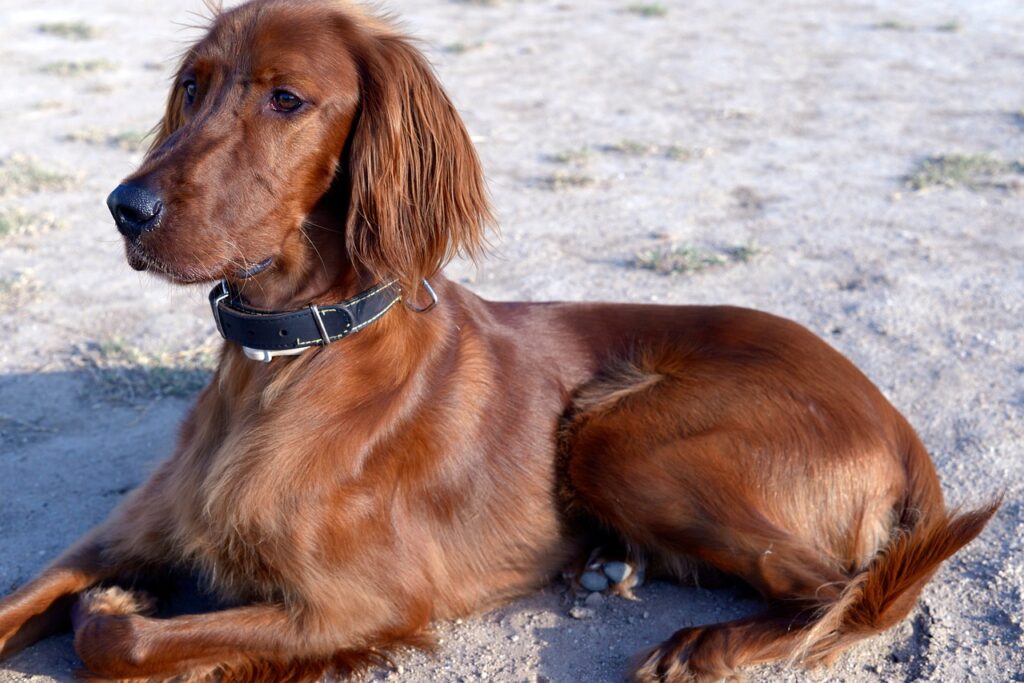
Red-coated dogs exhibit a broad range of shades, from deep auburn to a lighter copper tone. This vibrant coloration is attributed to a high concentration of pheomelanin, the pigment responsible for red and yellow hues. While no dog is naturally a bright, fire-engine red, their coats often shine with warm, rich undertones, especially in direct sunlight. The Irish Setter is one of the most famous breeds recognized for its luxurious red coat, while the Vizsla and Rhodesian Ridgeback also carry this distinct coloration. The Nova Scotia Duck Tolling Retriever has a particularly unique reddish-orange hue, and the Shiba Inu displays a warm, fox-like coat that adds to its appeal.
White and Cream

White and cream coats result from an absence of pigment, allowing the fur to reflect light and appear bright and pristine. While white-coated dogs may look ethereal, they often require more grooming to maintain their clean appearance. It is important to distinguish between true white dogs and those that are albino, as the latter lack pigmentation entirely, including in their eyes and skin. Dogs with white or cream coats can sometimes be more sensitive to sunlight and are prone to sunburn, requiring extra protection in outdoor settings. Some of the most recognizable white-coated breeds include the Samoyed, with its thick, fluffy coat, and the Bichon Frise, known for its soft, curly fur. The West Highland White Terrier and Maltese also carry this bright white coloration, while the Great Pyrenees stands out with its dense, protective coat.
Yellow and Golden

Yellow and golden coats are produced by moderate levels of pheomelanin, resulting in shades that range from pale wheat to deep gold. This coloration is particularly striking in breeds such as the Golden Retriever, whose long, flowing coat often gleams in the sunlight. Labrador Retrievers frequently showcase a lighter yellow tone, which can vary from nearly white to a rich golden hue. Pomeranians often exhibit a vibrant golden coat, while Cocker Spaniels and Chow Chows also carry shades within this spectrum. The warmth of this coat color gives these breeds a cheerful and inviting appearance, making them some of the most beloved companions worldwide.
Love Pets as Much as We Do?

Scroll up and click the ‘Follow’ button to stay updated with the latest heartwarming, hilarious, and helpful pet posts from Pawdown, delivered straight to your Microsoft Start feed and MSN homepage!