
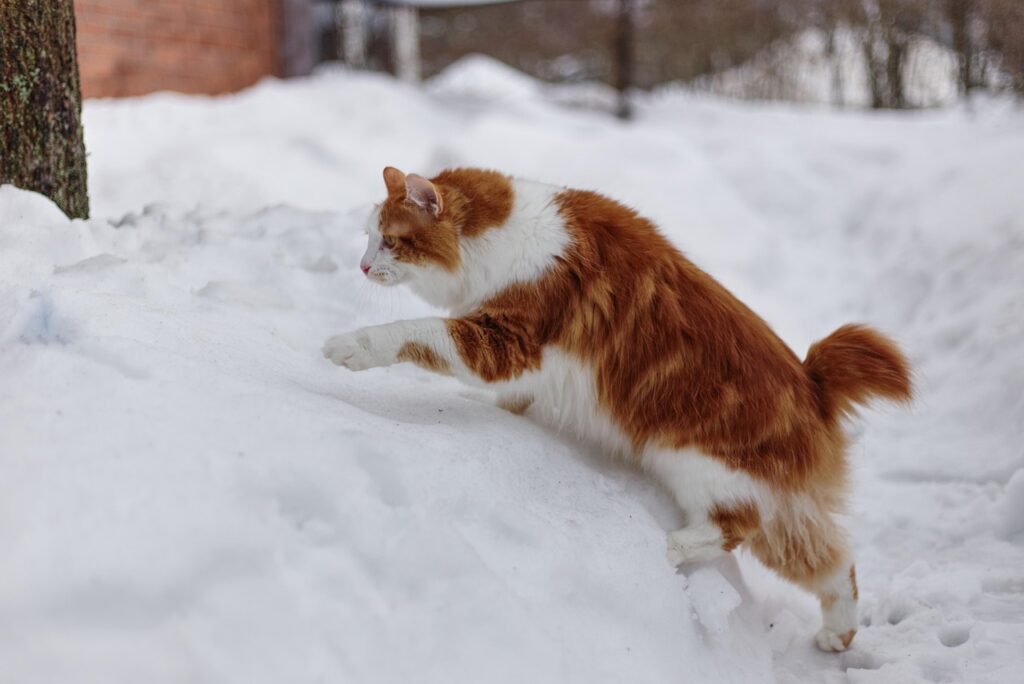
Imagine a world where a cat’s tail tells a story—whether it’s a playful flick of a bushy plume or the charming sway of a barely-there bob. Some breeds captivate us with their cloud-like tails, while others intrigue us with their striking lack of one. Each is a masterpiece of nature, blending history, genetics, and personality into one adorable package. Let’s explore these unique feline wonders—both tailless and gloriously fluffy—and discover what makes their tails (or lack thereof) so special!
1. Manx

A cat without a tail might seem unusual, but for the Manx, it’s a signature trait. Originating from the Isle of Man, this breed is known for its complete lack of a tail or a short stub, the result of a natural genetic mutation. Manx cats come in different tail lengths, from completely tailless (“rumpy”) to short-tailed (“stumpy”) and even some with full-length tails. Despite their missing appendage, they’re incredibly agile, using their strong hind legs to leap impressively. Their rounded, compact bodies and dense coats add to their sturdy appearance, making them well-equipped for cold climates.
2. Japanese Bobtail

The Japanese Bobtail carries a tail unlike any other—it’s short, twisted, and curled, resembling a fluffy pom-pom. This unique trait is caused by a genetic mutation specific to the breed, ensuring that no two tails are exactly alike. Originating in Japan centuries ago, these cats have been cherished for their luck-bringing reputation, often depicted in traditional art and lucky cat statues (Maneki-neko). Their tails, though short, are flexible, expressive, and sometimes even slightly kinked. Combined with their sleek, athletic build and playful demeanor, Japanese Bobtails are both visually striking and endlessly entertaining.
3. American Bobtail

Unlike the Japanese Bobtail, the American Bobtail has a rugged, wild appearance, with a short tail that varies in length but rarely exceeds half the normal size. This breed developed naturally in North America, with its shortened tail resulting from a spontaneous genetic mutation. Their tails, though stubby, remain expressive, moving to reflect their moods much like a full-length tail would. With a muscular build, thick coat, and piercing gaze, they resemble a mini wildcat. Despite their tough looks, they’re affectionate and social, forming strong bonds with their families.
4. Pixie-Bob

The Pixie-Bob’s short tail, usually one to six inches long, only enhances its resemblance to the bobcat, though this breed is fully domestic. With a history shrouded in folklore, some believe it originated from wildcat hybrids, but genetic studies confirm they are purely domestic. Their bobbed tails are thick and slightly curved, adding to their distinctive look. These cats often have polydactyl paws, furthering their wild aesthetic. Despite their rugged appearance, Pixie-Bobs are affectionate, intelligent, and dog-like in their devotion to their humans, proving that their wild looks don’t match their gentle nature.
5. Cymric

Though often considered a long-haired version of the Manx, the Cymric is a breed of its own, with its lack of tail adding to its rounded, fluffy appearance. The tailless gene is the same as that of the Manx, meaning some are born without tails at all, while others have short, stubby ones. Their dense double coats make them appear even rounder, and their powerful hind legs give them a rabbit-like hop when they run. Highly affectionate and people-oriented, Cymrics use their body language, including subtle tail movements (or lack thereof), to communicate with their families.
6. Highlander

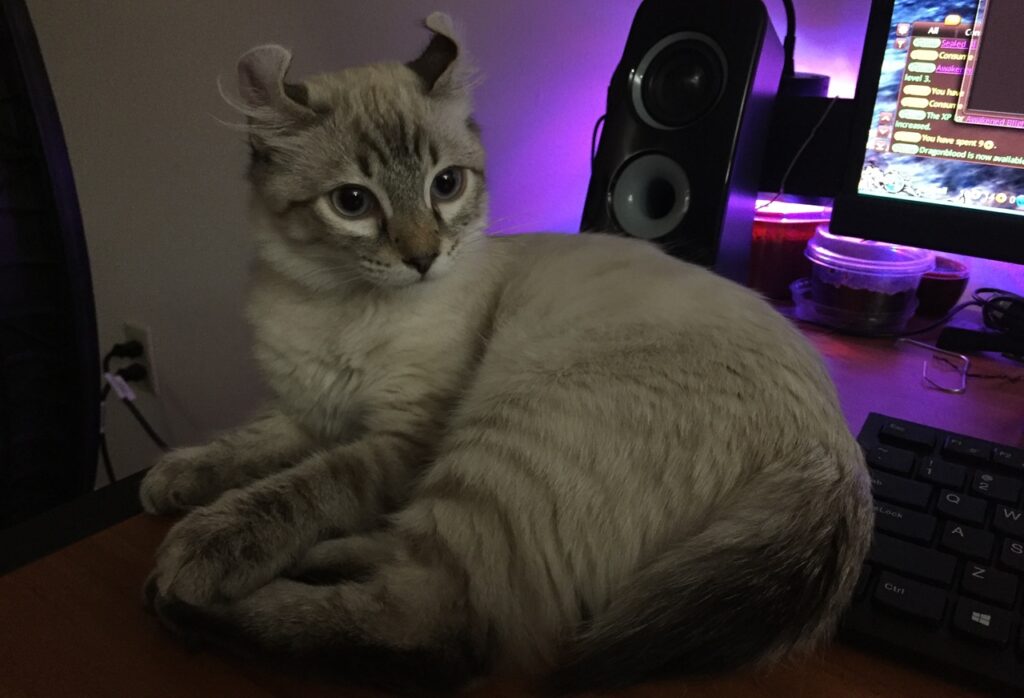
With their muscular build, curled ears, and bobbed tail, Highlanders are as exotic as they look. Their short tails, usually about half the length of a typical cat’s, may be kinked or slightly curved, giving each cat a unique tail shape. This breed was developed in the early 2000s, combining domestic and wild-looking traits without any actual wild blood. Despite their imposing looks, Highlanders are playful and highly social, often engaging in games and even enjoying water. Their expressive tails, though short, still manage to flick and wag when they’re excited or curious.
7. Lynx
The wild Lynx is one of nature’s most famous tailless felines. Unlike domestic breeds with genetic mutations, the Lynx has a naturally short tail that helps it survive in cold climates. The stubby tail prevents frostbite and doesn’t hinder balance as it maneuvers through rugged landscapes. Lynx tails are typically black-tipped, thick, and sturdy. These wild cats, found in North America, Europe, and Asia, are powerful hunters with thick fur and tufted ears that enhance their sharp hearing. Their bobbed tails, combined with their massive paws, make them perfectly adapted to snowy environments.
Cat Breeds With Fluffy Tails

There’s something undeniably enchanting about a cat with a luxuriously fluffy tail. These soft, plumed wonders aren’t just for show—they serve a purpose, from helping with balance to expressing emotions. But beyond their practical uses, fluffy tails add an extra layer of charm and elegance to a cat’s appearance. Whether curling gracefully around their paws or flicking playfully in the air, these magnificent tails turn every movement into a mesmerizing display. Let’s explore the most dazzling breeds blessed with these feathery masterpieces!
1. Maine Coon
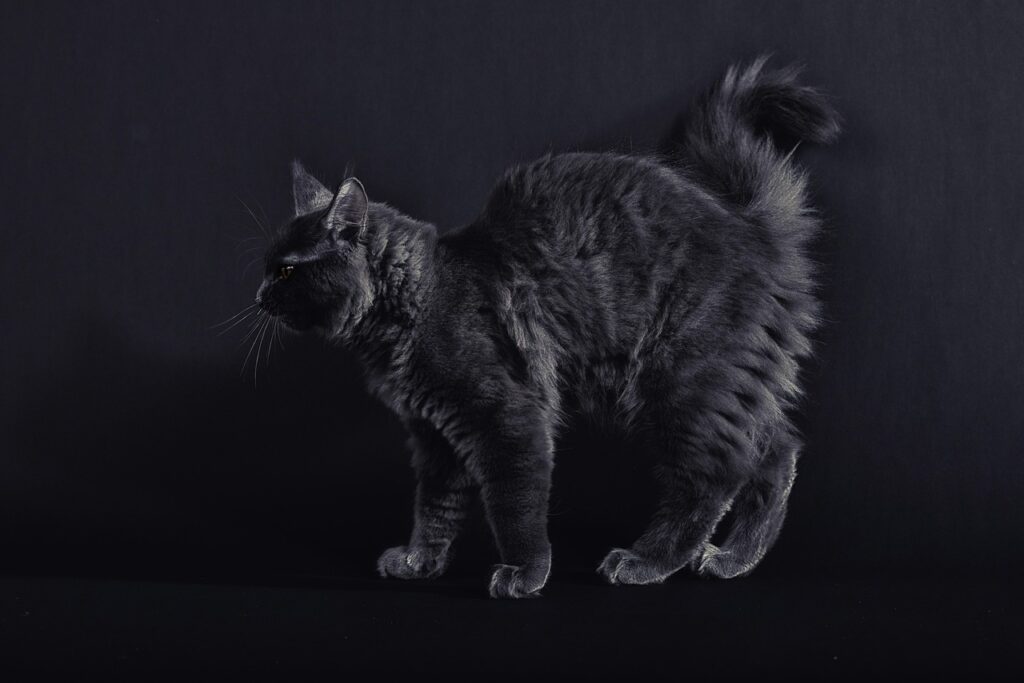
The Maine Coon’s tail is as grand as its personality—long, thick, and bushy, often stretching as long as its body. This impressive appendage serves both form and function, acting as a blanket in cold weather or a balancing tool during agile movements. Originally developed in New England’s harsh winters, their thick, water-resistant fur and luxurious tails provided necessary warmth. Their tails are also highly expressive, swishing with excitement or curling gently when relaxed. Whether wrapped around themselves like a scarf or held high in greeting, a Maine Coon’s tail is a masterpiece of feline design.
2. Norwegian Forest Cat

A Norwegian Forest Cat’s tail is a showstopper—long, feathery, and thick enough to shield them from Arctic winds. Evolved for survival in Scandinavian forests, their tails help conserve body heat while navigating snowy landscapes. Their luxurious, water-resistant coats complement their magnificent tails, making them one of the most visually striking breeds. These cats carry their plumed tails with pride, often draping them around their bodies when resting. Their tails also aid in balance, especially when climbing trees, an instinct they retain from their wild ancestors.
3. Persian

Persians are known for their glamorous, flowing coats, and their tails are no exception. Their bushy, plume-like tails are soft, thick, and often as fluffy as the rest of their body. This breed’s tail adds to its regal appearance, moving gracefully as they saunter through the house. While their tails serve little functional purpose beyond expression, they enhance the breed’s elegant aura. With a calm, affectionate personality, Persians often flick their tails gently while lounging, making even the simplest movements look majestic.
4. Siberian

The Siberian’s tail is as rugged as its origins—thick, bushy, and perfectly adapted for Russia’s brutal winters. Acting as both insulation and a balancing tool, their tails help them navigate snowy terrain while also serving as a built-in blanket when curled up. Siberians have dense triple-layered coats, and their tails are equally plush, keeping them warm in subzero temperatures. Despite their wild appearance, they are affectionate, playful, and known for their agility, often using their fluffy tails for balance during daring jumps.
5. Somali

The Somali’s tail is a striking feature—long, feathery, and constantly in motion. Sometimes compared to a fox’s tail, its thick, plume-like fur makes it one of the most attractive tails in the feline world. This breed is a long-haired version of the Abyssinian, retaining the same athleticism and high energy. Their tails aid in balance as they leap from surface to surface, always on the move. Whether flicking with excitement or curling gracefully when resting, the Somali’s tail is a key part of its elegant, dynamic personality.
Love Pets as Much as We Do?

Scroll up and click the ‘Follow’ button to stay updated with the latest heartwarming, hilarious, and helpful pet posts from Pawdown, delivered straight to your Microsoft Start feed and MSN homepage!