
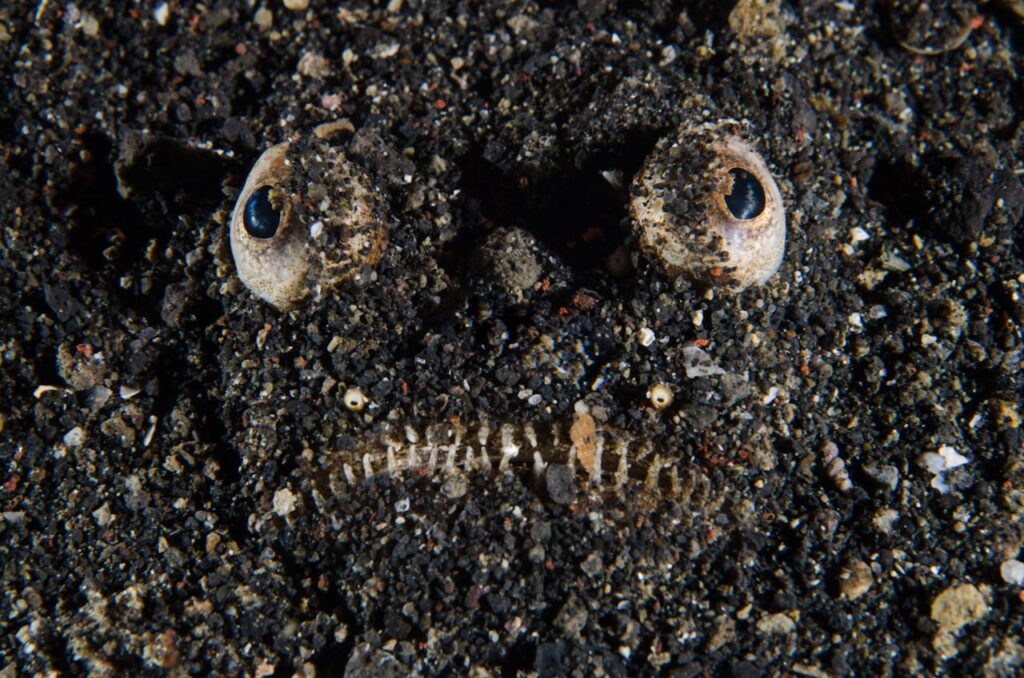
The ocean harbors some of the most ingenious hunters, many of which remain hidden in plain sight. Among them are small fish whose innocent appearances conceal their lethal predatory nature. These masters of disguise use camouflage, mimicry, and other cunning tactics to outwit prey and evade predators. By blending into their surroundings or impersonating other creatures, they survive and thrive in their underwater world. These fascinating fish showcase evolution at its finest, proving that size isn’t everything when it comes to being a skilled predator. Let’s uncover eight remarkable small fish that are predators in disguise.
1. Reef Stonefish
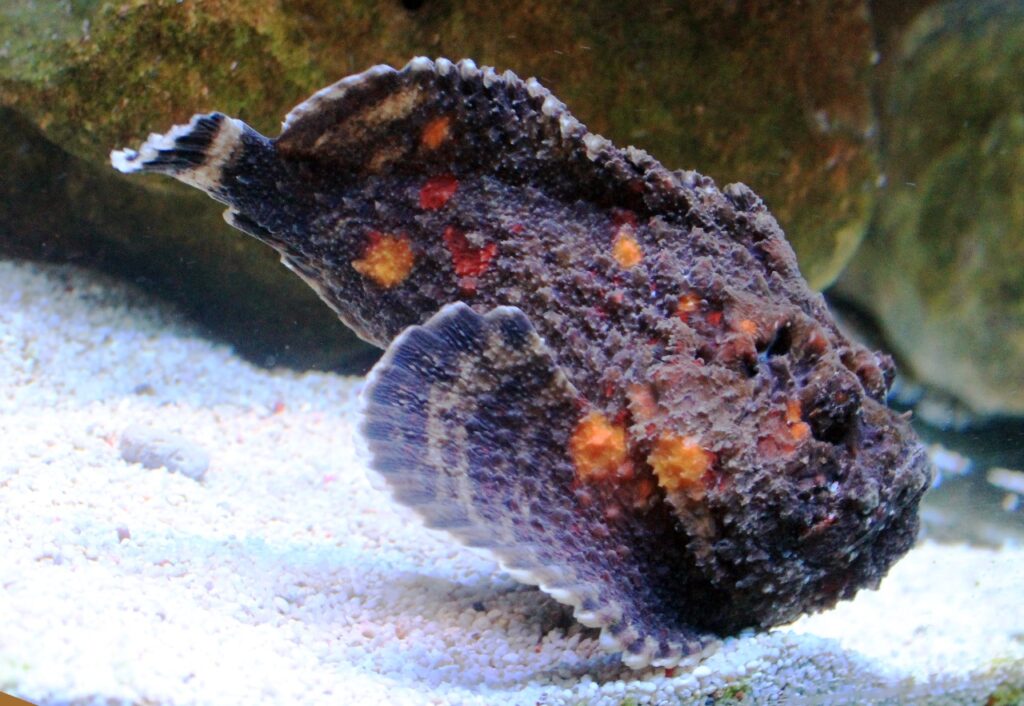
The reef stonefish is a venomous predator that relies on camouflage to secure its meals. Found on reef floors in the Indo-Pacific, it perfectly mimics the appearance of rocks or corals, even allowing algae to grow on its skin for an authentic look. This master of disguise remains motionless for hours, waiting for prey like shrimp or small fish to venture too close. Using a lightning-fast strike, it engulfs its target in a single gulp. While its venomous spines are a defense mechanism, its primary weapon is its incredible ability to hide in plain sight, making it an expert ambush hunter.
2. Painted Frogfish
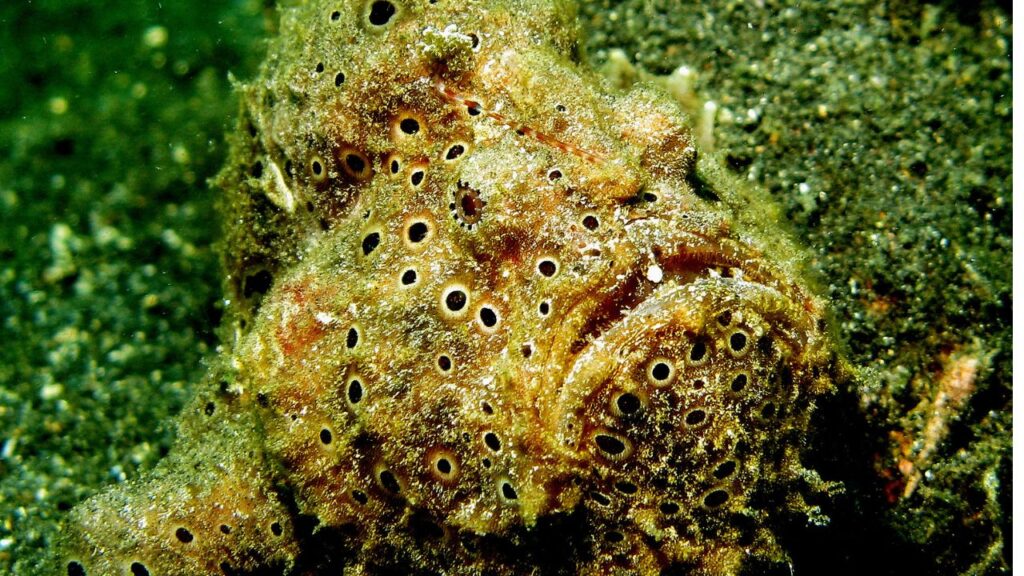
The painted frogfish is a true shapeshifter, using its ability to change colors to blend seamlessly with its environment. Found in rocky and coral reefs, it mimics sponges or corals to lure prey into a false sense of security. This fish employs a lure on its head to attract small fish and crustaceans, which it strikes with astonishing speed—less than 6 milliseconds. Its stretchy mouth allows it to consume prey as large as itself. Despite its small size and sluggish movements, the painted frogfish’s adaptive camouflage and hunting techniques make it one of the ocean’s most fascinating predators.
3. Lionfish
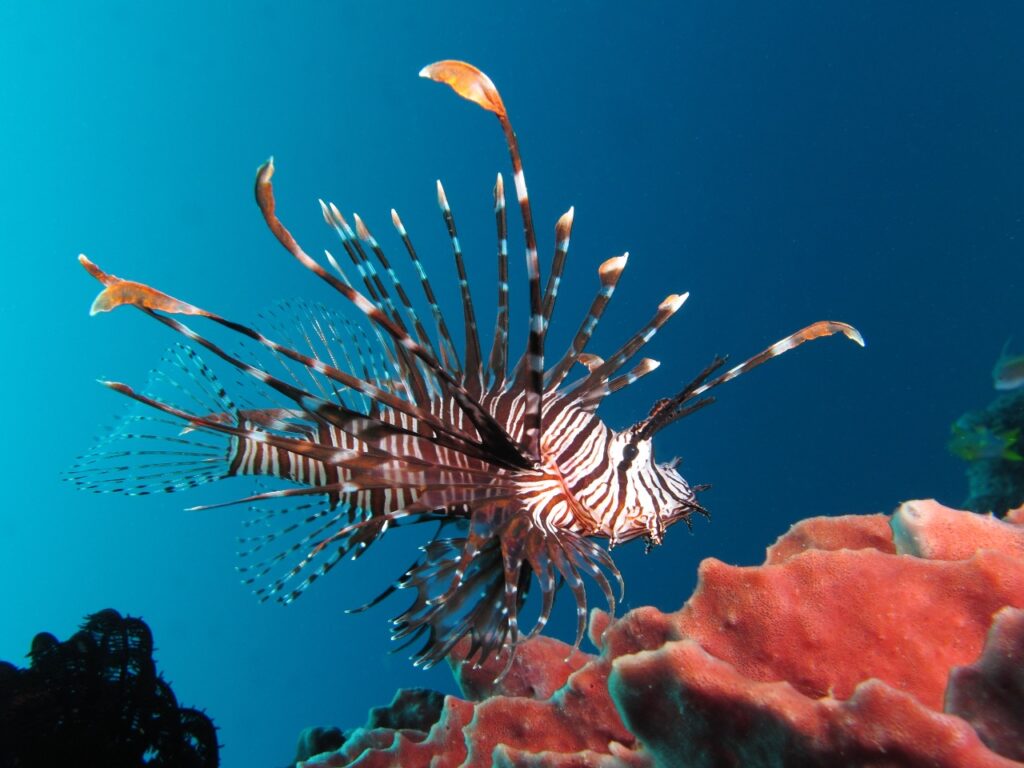
Lionfish are strikingly beautiful predators with venomous spines and bold striped patterns. Their unique appearance provides camouflage, allowing them to blend effortlessly into coral reefs. This helps them ambush prey like small fish and crustaceans, using stealth and precision to strike. Native to the Indo-Pacific, lionfish have spread to other oceans as invasive species, where their lack of natural predators has enabled them to dominate ecosystems. Despite their venomous reputation, lionfish rely on their cunning hunting strategies and striking looks to thrive in their habitats, making them both captivating and deadly to observe.
4. Leafy Sea Dragon
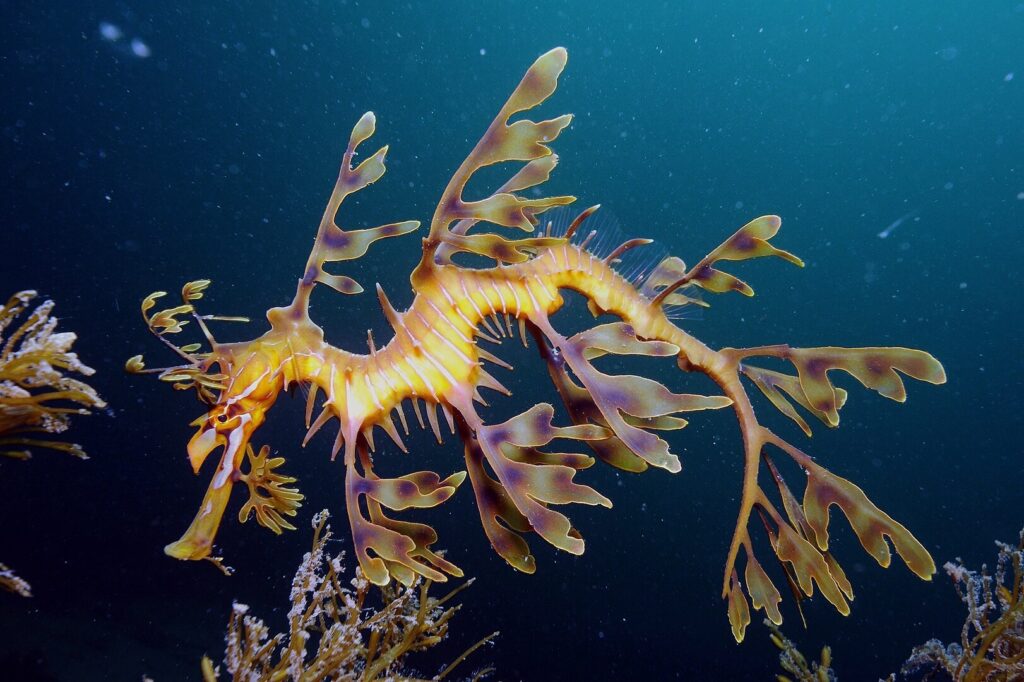
The leafy sea dragon is a marvel of evolution, with leaf-like appendages that mimic seaweed and algae. Found in Australian coastal waters, these slow-moving predators drift with ocean currents, making them virtually invisible to prey and predators alike. While their primary diet consists of small crustaceans and plankton, their intricate camouflage allows them to ambush unsuspecting prey with ease. Unlike seahorses, they cannot anchor themselves to seagrass, making them vulnerable to storms. Despite this, their unrivaled ability to blend into their environment makes the leafy sea dragon a master of deception in the underwater world.
5. Tasselled Anglerfish
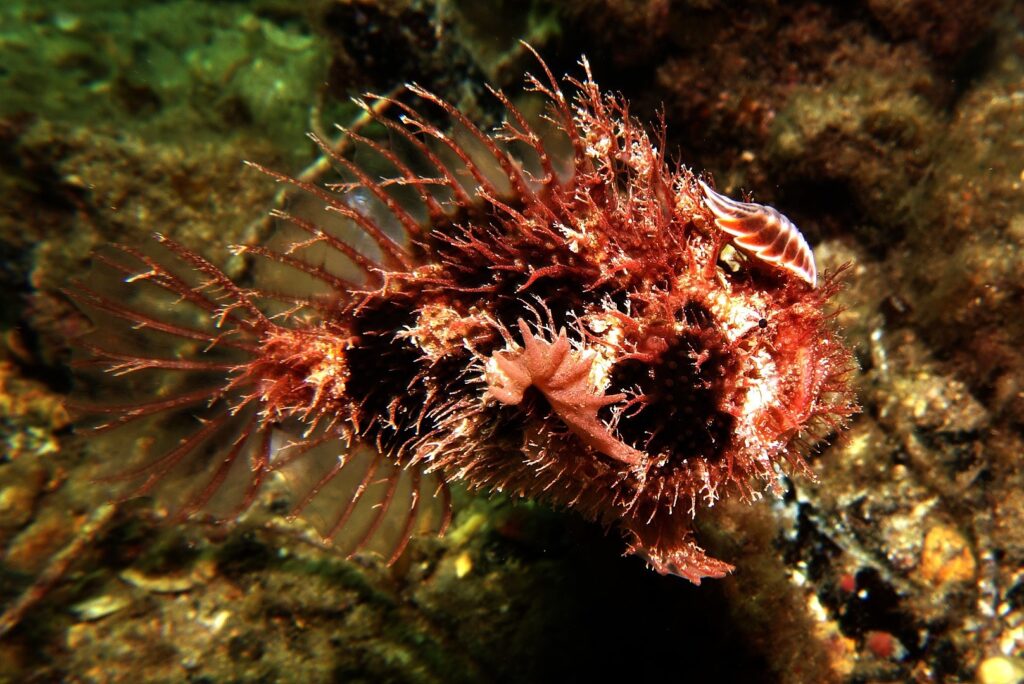
The tasselled anglerfish is a bizarre-looking predator that thrives on coral reefs. Its frilly appendages and vibrant orange coloring allow it to mimic coral and blend seamlessly with its environment. This fish uses a bioluminescent lure, a glowing appendage on its head, to attract prey such as small fish and crustaceans. Once prey comes close, the anglerfish’s enormous mouth opens wide to swallow its meal whole. Despite its odd appearance, the tasselled anglerfish’s combination of stealth, camouflage, and predatory precision makes it a highly effective hunter in the depths of the ocean.
6. Ghost Pipefish
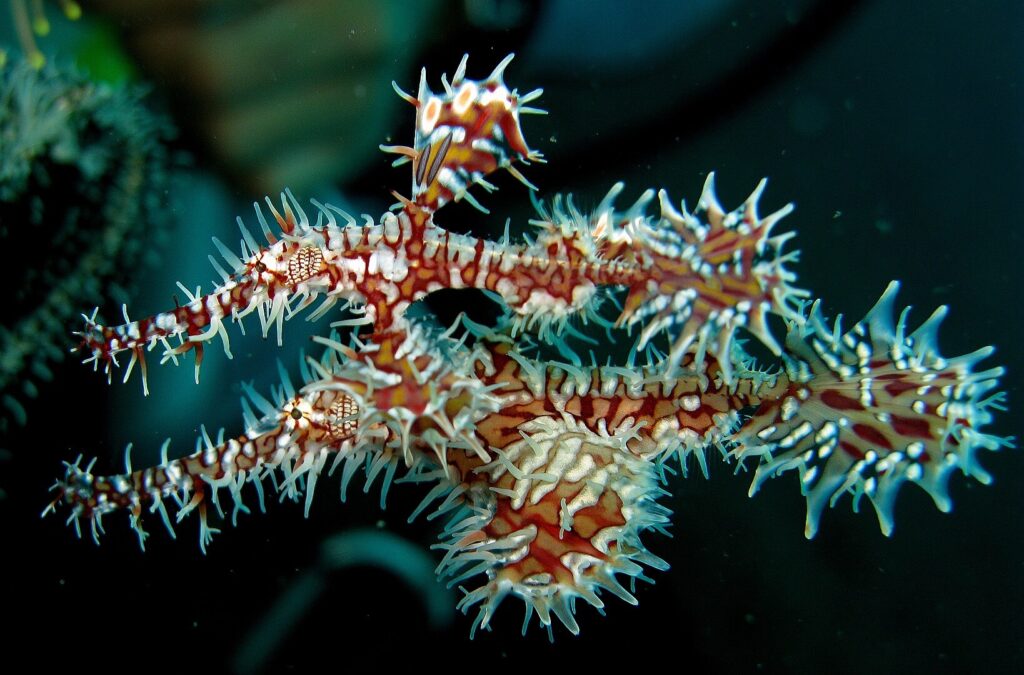
Ghost pipefish are delicate creatures that blend into seagrass, coral, or other underwater vegetation. Their elongated bodies and intricate patterns mimic the appearance of floating debris, making them almost invisible to predators and prey. During the breeding season, ghost pipefish can change colors to better match their new surroundings, further enhancing their camouflage. Using their tubular snouts, they suck in tiny prey such as plankton and small crustaceans. These mysterious fish rely on their mimicry and stealth to survive, showcasing the extraordinary ways nature equips its creatures to thrive in challenging environments.
7. Mimic Octopus
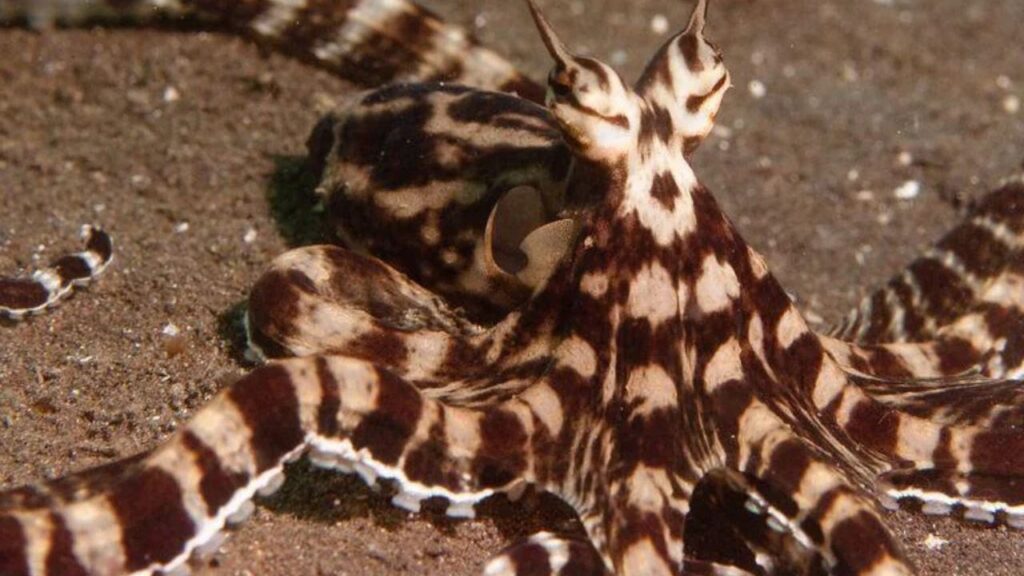
The mimic octopus takes camouflage to an entirely new level, using its shape-shifting abilities to impersonate other marine creatures. Found in Indonesian waters, this highly intelligent predator can imitate dangerous species such as lionfish, flatfish, and sea snakes to deter predators or sneak up on prey. It can also change its color and texture to blend into its surroundings. The mimic octopus uses these remarkable skills to navigate the ocean with ease, hunting small fish and crustaceans while avoiding threats. Its versatility and ingenuity make it one of the most fascinating predators in the animal kingdom.
8. Wolf Fish
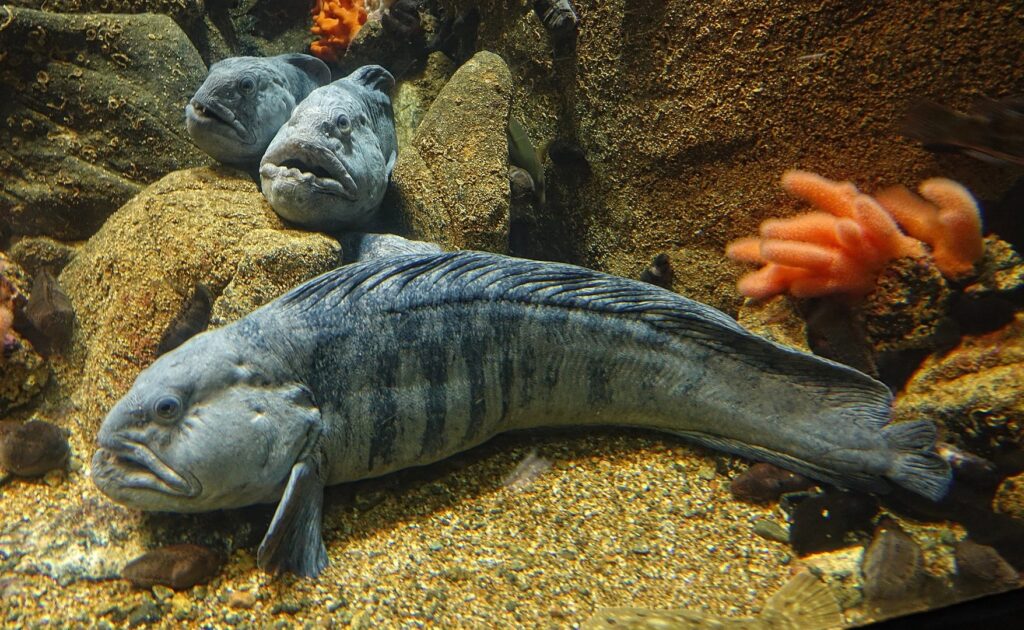
The wolf fish, native to the Atlantic Ocean, is a striking predator known for its menacing appearance and powerful jaws. With sharp, protruding teeth and a strong body, it uses its impressive bite to crush the hard shells of prey such as sea urchins, crabs, and mollusks. Despite its fearsome look, the wolf fish is non-aggressive toward humans and is often sought after by divers for its unique appearance. Its predatory prowess and distinct features make it an excellent example of a small yet powerful hunter in marine ecosystems.
Love Pets as Much as We Do?

Scroll up and click the ‘Follow’ button to stay updated with the latest heart-warming, hilarious, and helpful pet posts from Pawdown, delivered straight to your Microsoft Start feed and MSN homepage!