
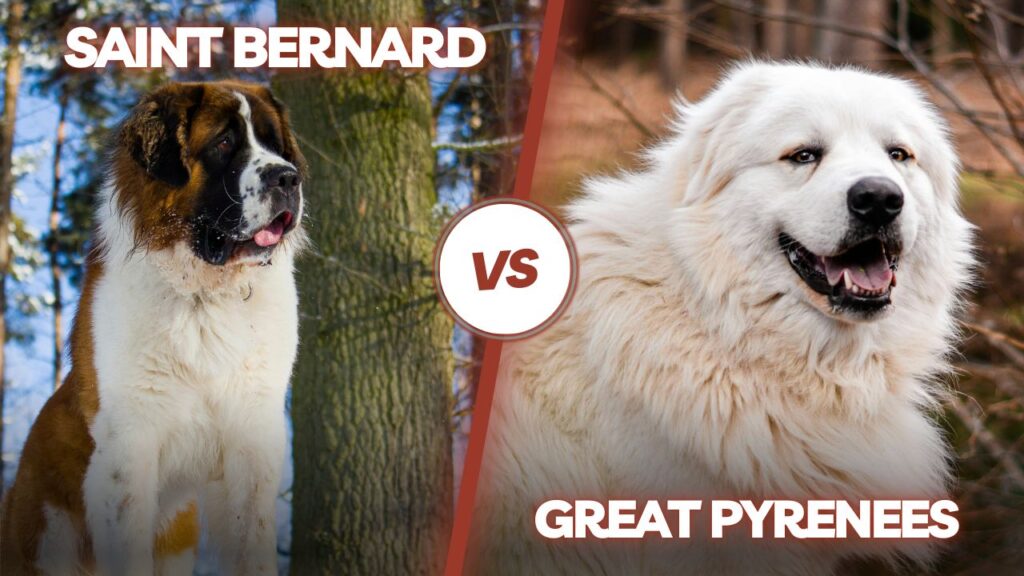
Saint Bernards and Great Pyrenees are often affectionately called “gentle giants,” and it’s easy to see why. Both breeds are massive, yet have incredibly sweet temperaments, making them ideal for families. While their gentle natures are similar, there are also noticeable differences in their size, appearance, and even how they interact with their families. If you’re debating which breed would make the perfect pet or simply want to learn about these lovely dogs, we’ve got you covered! Let’s break down how they compare in everything from their grooming habits to their energy levels.
1. Size And Appearance

Saint Bernards are larger, typically weighing between 120-180 pounds, whereas Great Pyrenees usually weigh between 85-120 pounds. While both breeds have a commanding presence, Saint Bernards boast a stockier, shorter build. In contrast, Great Pyrenees are longer and leaner, giving them an elegant silhouette. When it comes to coats, Saint Bernards have either short or rough, reddish-brown coats with white markings, while the Great Pyrenees typically has a fluffy, solid white coat. Their differing appearances, though both beautiful, reflect their varying temperaments—Saint Bernards are warm and inviting, while Great Pyrenees offer a dignified presence.
2. Temperament And Personality

If you’re looking for a devoted, family-friendly dog, both breeds excel in that area, but they differ in personality. Saint Bernards are known for being affectionate and deeply attached to their families. They’re especially great with children and love cuddles and attention. Great Pyrenees, on the other hand, tend to have a more independent streak, often observing their surroundings and showing protective instincts due to their history as livestock guardians. While they are still loyal and love their families, they prefer to watch over them, giving them space while ensuring they’re safe.
3. Energy Levels And Activity Needs

Although both breeds are massive, their activity levels differ. Saint Bernards are generally calm, and while they love their walks and playtime, they’re not overly energetic. Their daily exercise should be enough to keep them in good health. On the other hand, Great Pyrenees tend to have bursts of energy while patrolling their territory, thanks to their protective instincts. They require a bit more engagement in outdoor activities. Regardless of their differing levels of energy, both breeds still need a good balance of play, rest, and mental stimulation to stay happy.
4. Grooming Requirements

Grooming these two breeds can be time-consuming, but their beauty makes the effort worth it. Saint Bernards shed, so regular brushing is necessary to keep their coats neat and free of tangles. They also tend to drool quite a bit, meaning you’ll need to clean around their mouths regularly. Great Pyrenees, due to their thick double coat, also shed and require regular brushing to avoid mats. Their coat sheds most heavily in warm weather. Additionally, both breeds require nail trims and good dental care, though the Great Pyrenees’ fur demands a bit more effort for optimal maintenance.
5. Adaptability To Living Conditions

Both breeds do well in spacious homes but can also adapt to indoor living if they get enough outdoor time. Saint Bernards have a laid-back temperament that often makes them suitable for apartment living, as long as they are given daily walks. They’re fine hanging out indoors, especially in cozy corners. Great Pyrenees, though, thrive in homes with large yards or plenty of open space where they can patrol. Their instincts to protect and explore mean they’re happiest when they have space to roam, but both breeds enjoy being indoors with their loved ones when possible.
6. Training And Intelligence

Training these breeds can be a delightful challenge depending on the dog. Saint Bernards tend to have a strong desire to please, making them easier to train with positive reinforcement. They enjoy training sessions as bonding experiences and thrive on attention. In contrast, Great Pyrenees have a more independent, sometimes stubborn streak. Due to their history as livestock guardians, they tend to think for themselves and may need a patient and consistent approach. Once trained properly, however, both breeds are intelligent, loyal, and obedient companions, excelling at learning commands and becoming well-behaved family pets.
7. Social Behavior With Family And Pets

Both breeds are known for being gentle giants and are generally great with children and other pets. Saint Bernards are friendly, loving, and enjoy being involved with the whole family, happily sharing space with other animals. They are especially good with children, always looking out for them with their calm demeanor. Great Pyrenees are slightly more reserved, particularly around strangers, though they are very affectionate with their family. Due to their protective instincts, they tend to watch over their home and its inhabitants, even though they’re still good companions for kids and other pets if socialized early.
8. Lifespan And Health Considerations

Like many large breeds, Saint Bernards and Great Pyrenees don’t have the longest lifespans. Saint Bernards typically live for around 8-10 years, while Great Pyrenees can live a bit longer, often reaching 10-12 years. Both breeds are prone to joint issues and can suffer from hip dysplasia, bloat, and heart problems. Saint Bernards are also vulnerable to heat exhaustion due to their thick coats and large bodies, while Great Pyrenees need regular veterinary check-ups to keep their thick fur and joints healthy. Despite the shorter lifespan, they provide years of loving companionship for their families.
Love Pets as Much as We Do?

Scroll up and click the ‘Follow’ button to stay updated with the latest heartwarming, hilarious, and helpful pet posts from Pawdown, delivered straight to your Microsoft Start feed and MSN homepage!